
LG Electronics
Designing a high-stakes approval workflow for Formula 1 marketing assets.
LG's Formula 1 marketing work involved more than creating campaign assets. Multiple global marketing agencies need to coordinate with LG, Just Marketing International, Inc (JMI) [now CSM Sport & Entertainment], Young & Rubicam (Y&R) [now VMLY&R], and Formula 1 while working within strict brand and rights holder guidelines. A creative asset could move through several rounds of review before it was ready to publish, and the process had to preserve accountability without slowing the work.
I worked as the UX/UI Designer across design conception, prototyping, and coding. My role in defining the workflow itself was smaller than my role in turning the workflow into a usable interface, but I helped make the process visible through flow mapping, rapid prototyping, and interface design. The project moved from initial flow-chart thinking to a working solution in a little over three weeks and ultimately launched.The Problem
The challenge was not simply that there were many reviewers. The deeper issue was the approval path crossed organizational and cultural boundaries. Global marketing agencies submitted work to Y&R, JMI participated in the middle of the process. The LG Formula 1 team and Formula One Management (FOM) had their own review requirements.
Without a shared system, the process risked producing uncertainty at every handoff. People needed to know where an asset was, who owned the next decision, what have been rejected, what needed revision, and when an approved asset could move forward. The design problem was therefore to make a complicated governance process understandable enough to use quickly and traceable enough to support high-stakes brand review.
The constraint that shaped the work
The project had to be completed in just over three weeks. That constraint made a long discovery cycle unrealistic. Instead, the work depended on quickly externalizing the workflow, getting stakeholders aligned around a visible model, and using prototypes to make unresolved questions concrete.
The Process
Start with the system, not the screen
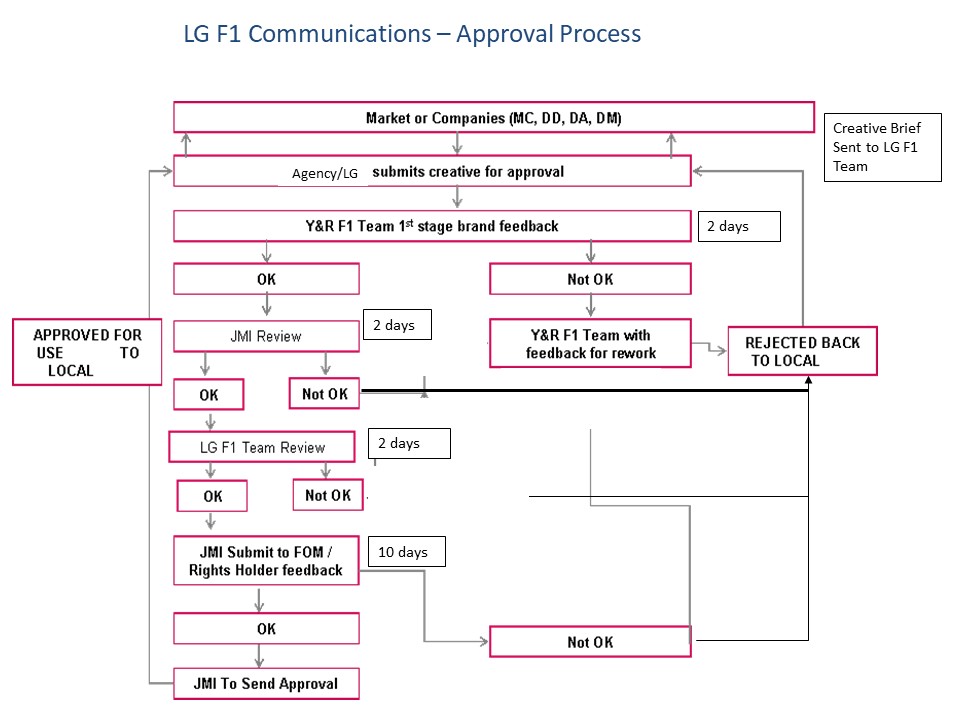
The first useful artifact was a flow chart for the approval process. It mapped the movement of a marketing asset through submission, review, feedback, revision, approval, and publishing. The flow made the organizational complexity visible and helped distinguish a linear handoff from the loops created when an asset was rejected or sent back for revisions.
The documented process included global marketing agencies, Y&R, JMI, LG's Formula 1 team and FOM. The workflow needed to support both forward movement and controlled return paths, because rejection was not an exception in the system, it was part of the system.
Make the work tangible quickly
Once the flow was established, I moved into rapid prototyping. Much of the early wireframing happened on whiteboards and paper, which allowed the team to test the shape of the experience before investing in polished screens. The goal was not to make the first concept presentable. It was to create something concrete enough for the stakeholders to react to and specific enough to reveal missing decisions.
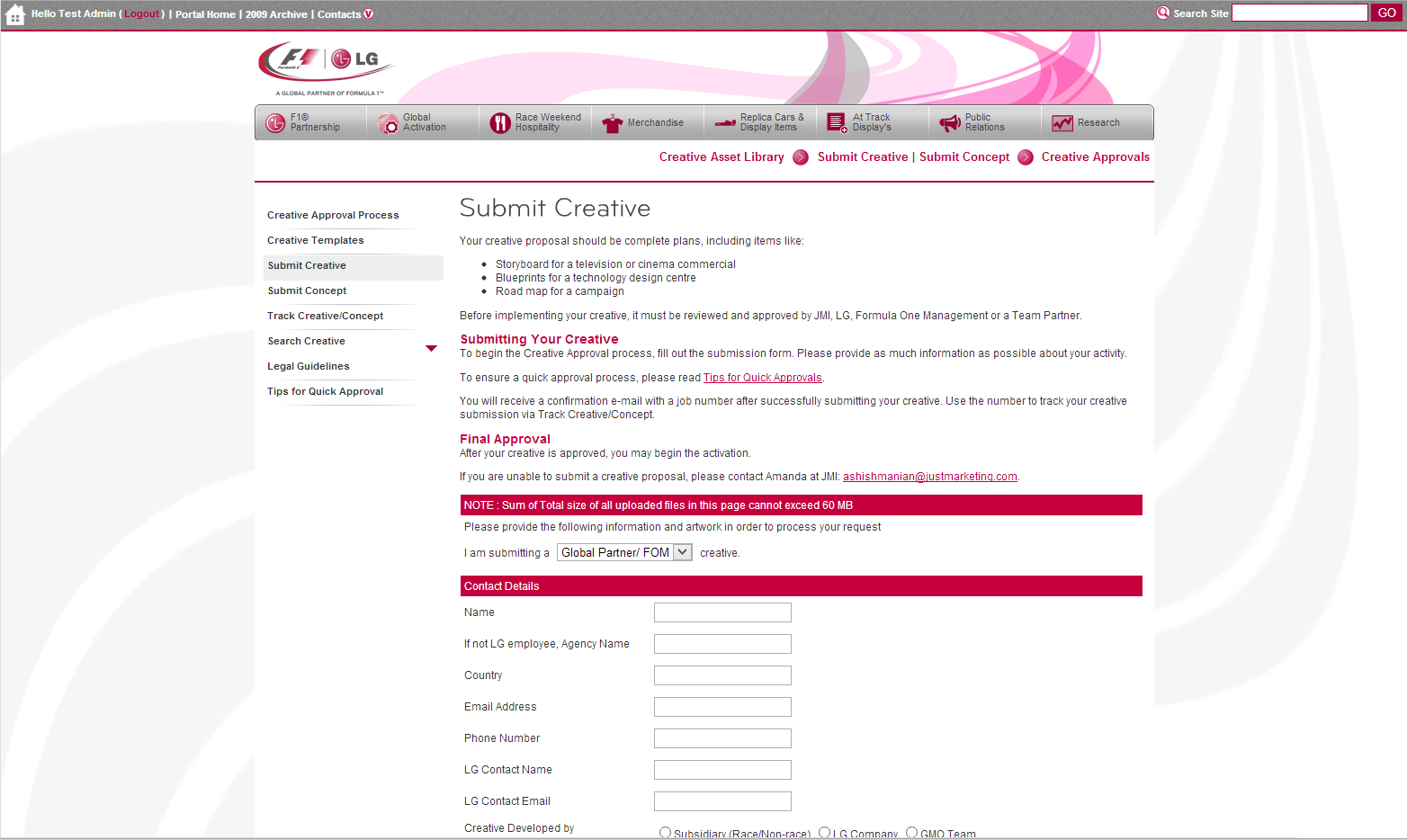
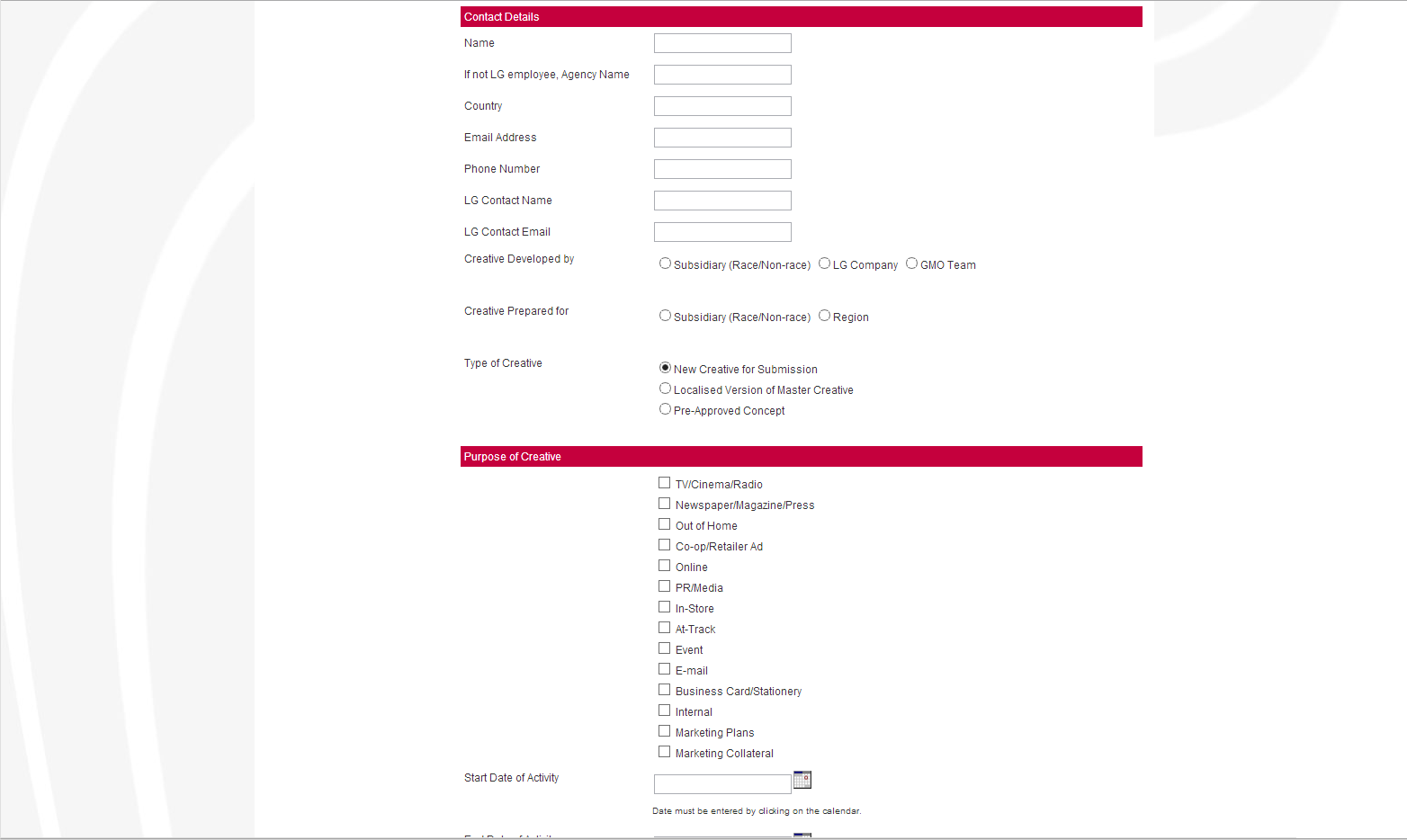
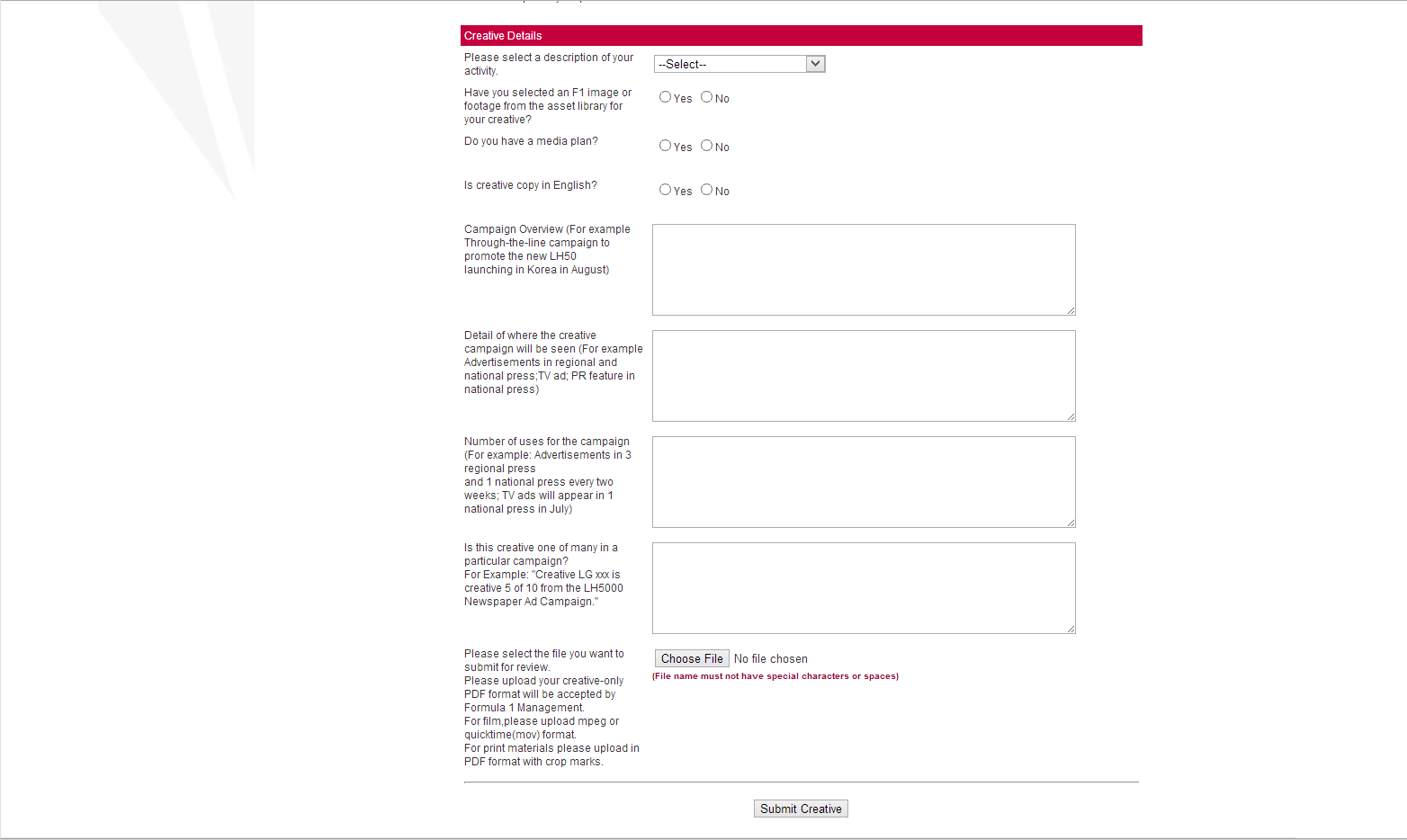
The prototype then became a bridge between the process model and the interface. Instead of asking stakeholders to discuss an abstract approval system, we would walk through how a user would submit an asset, provide creative-brief information, receive feedback, respond to a rejection, and move a revised asset toward approval.
Design for traceability
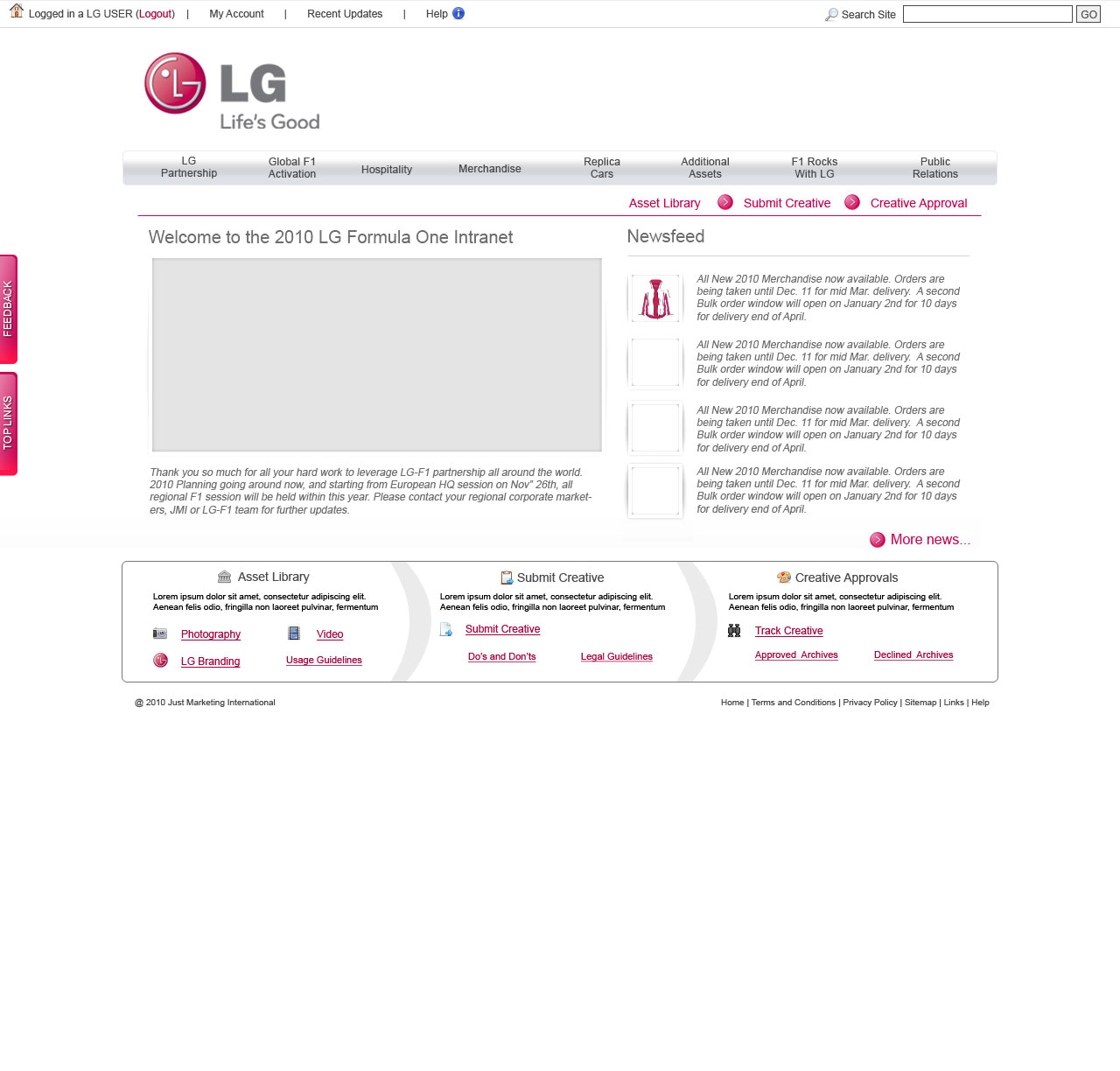
The direction treated content submission and approval as one connected experience. Interface screens supported creative-brief intake and made the approval journey clear. The design was not about reducing clicks; it was about reducing uncertainty at organizational handoffs.
The Results
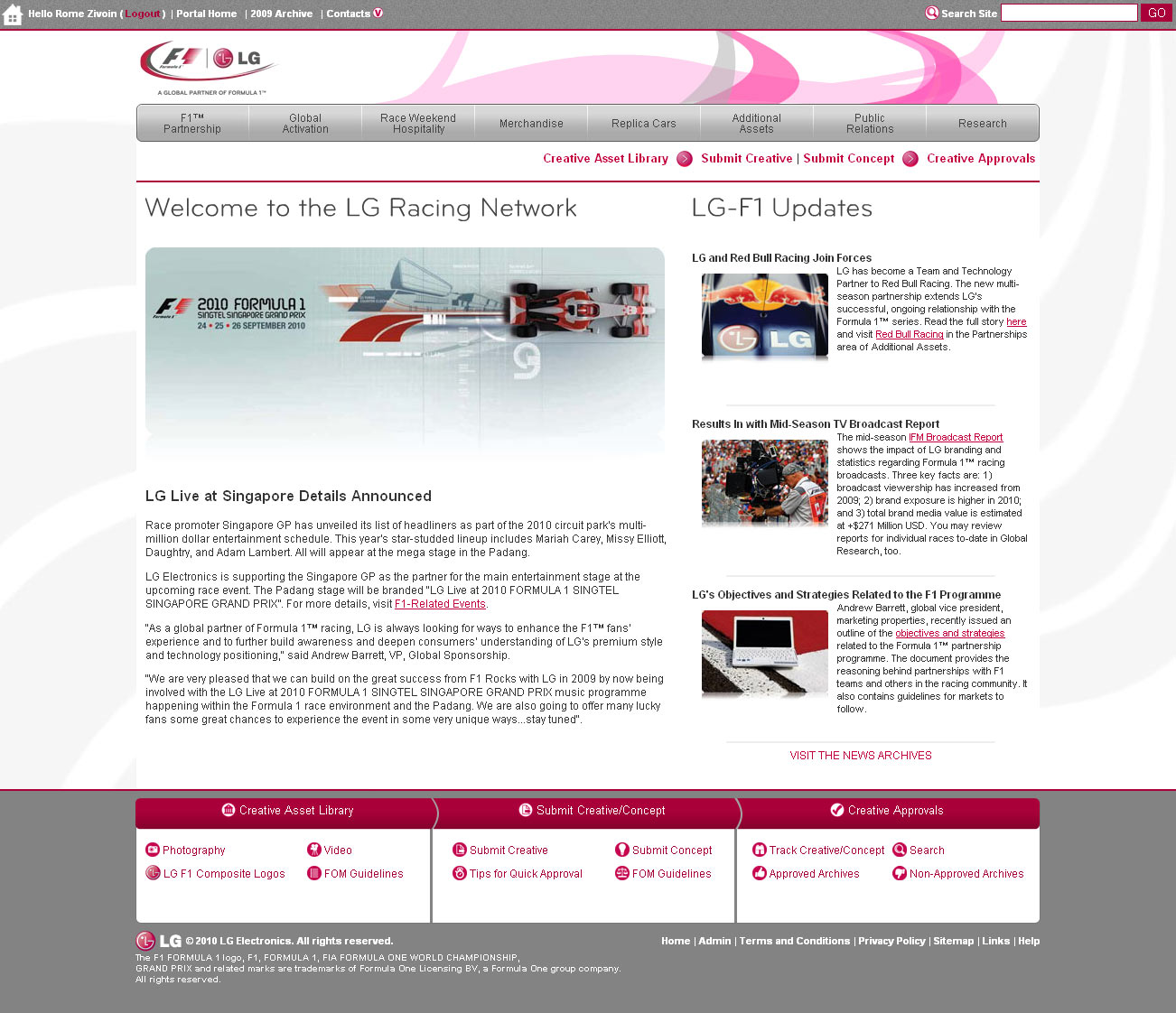
The work launched as an internal marketing intranet and approval solution. It translated a distributed, multi-party review chain in a system that could support structured content submission, feedback, approval, and publishing.
Leadership considered the process significant enough to pursue intellectual property protection. The patent filing "System and Method for Automated Content Submission, Review, Approval, and Publishing", US 12,928,124, Filed February 18, 2011, with the description "Patent for Marketing Assets Management System". The patent was ultimately rejected, but the decision to pursue it is meaningful evidence that the work was viewed as more than a one-off interface.
The Impact
The lasting impact of the project was conceptual as well as operational. The team did not merely produce screens for one campaign. It articulated a repeatable model for how branded content could move through a complex approval network while preserving review authority and publishing control.
For myself, the project reinforced the value of visualizing organizational complexity early. A flow chart, rough wireframe, or paper prototype can create alignment faster than a polished interface when the real problem is distributed responsibility. It also demonstrated that UX/UI work can reveal opportunities for the process innovation beyond the visible product surface.